Thursday, May 16, 2019

Evolution & Archaeology Overnight Field Study Day 1: Gingko Petrified Forest & Dry Falls


On our first day of the trip we went to Dry Falls and to a petrified wood forest. At the petrified wood forest, we ate lunch and then we looked at some carvings in some rocks then headed over to the Dry Falls. I was surprised when we got to see the largest dry falls in the world. I also took a few pictures and then we went to the cabins. - By Trevin

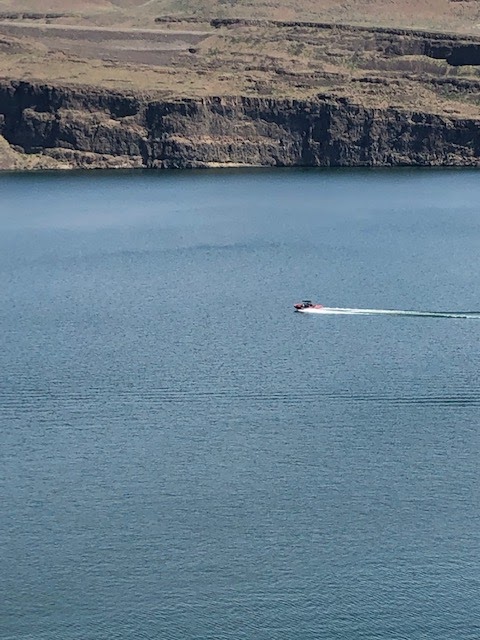
Pictures of Dry Falls:


Pictures of Gingko Petrified Forest:


Trees of Stone Hike:


Evolution & Archaeology Overnight Field Study Day 2: Stone Rose Interpretive Center Fossil Dig


By Adalyn:
We went to the Stone Rose Interpretive Center which was a place where we were taught about fossils and things like mineral stains. Mineral stains are rocks that fell into water the water that carried minerals embedded the minerals into the rock. Another thing they taught us was concretions. Concretions are metals like iron and steel that embed themselves in the rock. They also taught us about worm-tracks which were worm larva that fossilized. Then we went to a digging site where we could dig and scavenge for fossils. We could keep three fossils and an iron concretion, mineral stain, and worm tracks. After we were done we went back to the Stone Rose Interpretive Center where the volunteer archaeologists identified what types of fossils we found. We had a lot of fun searching and finding fossils.        


By Enzo:

We went to the Grand Coulee Dam which was built from 1933 – 1942. It is the biggest concrete structure in the world. They built it because the people’s crops were drowning. They finally thought that the Colombia River was flooding it. So they started to build the dam with tons of concrete. The Grand Coulee Dam is three and a half miles long, and about a mile down. The Grand Coulee Dam’s power was used for the Manhattan nuke in World War 2. We had a lot of fun at the Grand Coulee Dam! 


Thursday, May 9, 2019

Smile if you love swimming!

Swimming lessons at Norpoint Center are a highlight of our PE program, and this year was no exception. I think these pictures speak for themselves:


Friday, March 29, 2019

Gifted Resources

Here is a list of fabulous web resources related to gifted education - great info to be found for both teachers and parents, and often gifted kids themselves:

The National Association for Gifted Children, http://www.nagc.org, which has many resources for educators and parents.Their quarterly magazine Teaching For High Potential is full of useful information.
The Washington Association of Educators of the Talented and Gifted http://www.waetag.net, 
Supporting Emotional Needs of the Gifted http://sengifted.org, GREAT for parents.
Northwest Gifted Child association http://www.nwgca.org, also GREAT for parents. (See presentation below)
MENSA https://www.mensa.org, - their Mensa for kids site has great educational games and  excellent reading lists.
The Robinson Center for Young Scholars at the University of Washington https://robinsoncenter.uw.edu, 
The Davidson Institute for Talent Development http://www.davidsongifted.org, 
Hoagie's Gifted Education page http://www.hoagiesgifted.org, TONS of good stuff here!
The William & Mary Center for Gifted Education http://education.wm.edu/centers/cfge/, 
and gifted teacher Ian Byrd's blog, Byrdseed, http://www.byrdseed.com/about/ - my favorite "gifted" blog. 

I also want to mention the website ChallengeSucess.org which does not specifically relate to gifted students, but addresses many educational issues relevant to gifted students. I particularly like their Homework White Paper, which has shaped my own class homework policy: http://www.challengesuccess.org/Portals/0/Docs/ChallengeSuccess-Homework-WhitePaper.pdf

The big take-away from this white paper is: 
  • A review of research on homework showed almost no correlation between homework and 
    achievement for elementary school students.
    Source: Cooper, H., Robinson, J. C., & Patall, E. A. (2006). Does homework improve academic achievement? A synthesis of research 1987-2003. Review of Educational Research, 76(1), 1-62
Second, The BEST information on the social/emotional development of gifted children I have ever come across (and what makes me realize a Seabury education is absolutely PRICELESS):

 "What Parents Need To Know About Smart Kids" found under Connections Conference/2014 Presentations on the NWGCA website 
http://www.nwgca.org/2014-presentations.html

I saw a version of this presentation by Austin De Bonte, President of the NW Gifted Child Association at the 2013 WAETAG Conference and was literally in tears as De Bonte talked about how gifted children's perception of "otherness" colors their social experience because of their social maturity mismatch. I finally understood what my child was going through, and what I learned in this presentation still helps me understand so much more about the students in my classroom. This presentation is full of insightful information and positive steps parents can take. 

And finally, a video that addresses "The Top 10 Myths of Giftedness," which I wish I could show to the entire world! These gifted students say it better than I ever could.


Wednesday, March 6, 2019

Pendulum Investigation

An inquiry investigation to launch our study of physics: what are the properties of a pendulum? We thought about several questions: ...