Friday, September 15, 2017

Fall Gardening - In full Swing


Over the past few years our 4th graders have begun working on the garden to establish a vibrant area to grow food for study and consumption. After two years of work, a grant, and a ton of work by our very own Jenn Parker during the summer camps...we have an amazing garden!


Thursday, September 14, 2017

What is Dot Day?


The value of Dot Day can be a little hard to spot at first. At least, beyond the timeless value of art and creativity. But in participating in Dot Day activities, students are unknowingly practicing the act of growth mindset. This is the core of the book Dot Day. We are part  of 169 countries and 9,003,546 people registered to participate in Dot Day activities this year!

It's about a student who is convinced they can't create art. And through a simple act of support, the student realizes they can create art. The story is great. The heart of it surrounds the concepts of Carol Dweck's growth mindset in which students can learn to overcome "fixed" ideas about their abilities.


Dot Day Preparations

Dot Day is nearly at hand. In preparation, we are creating our t-shirts to wear.


Keep an eye out for more information tomorrow!


Friday, September 8, 2017

Science from the Garden

Seabury garden is in full bloom. A few of our 4th graders have been taking advantage of the crop surplus by finding ways to use the vegetables in cooking. 


Yesterday we made zucchini bread!


- Mr. B

The Speed of Neurons

Science, science, and more science. We can never get enough of it. 
This little flashback moment was from the first day of school. No sense in waiting to get us started. We had a guest teacher, Mr. Cory, who was a long time Seabury staff member. Mr. Cory taught about the speed of neurons. We tried to calculate the speed of the electrical current that moved through our bodies.


These simple movement experiments were designed to illustrate the speed at which our bodies transmit data through action and reaction.


We used connections through our feet and wrists, or elbows or hands to represent the neuron pathways.


 Then we calculated the speeds and averages. Math and science in one lesson?! Hard to beat that.


It was a great lesson that spanned topics of pyschology, biology, math, and electricity. Integrated sciences at their best! A bit thanks to Mr. Cory for his hard work.

- Mr. B

Friday, September 1, 2017

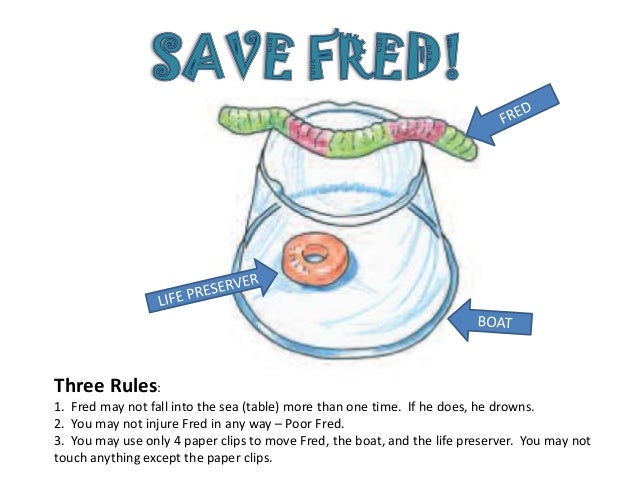
Saving Fred

Saving Fred is a creative problem-solving activity using a gummy worm, life saver, a cup, and some paperclips. 

Image result for saving fred

In Your Science Journal
Work with your partner to record in your science
notebook exactly what you did to save Fred.
You m...

We paired up with students from 3rd and 4th grades to test our life-saving skills.


The great news was that we came up with loads of different methods to save Fred.


Remarkably, some of the groups came up with a process within minutes. 


The goal was to find a few ways to do so. Everyone was able to find at least two ways.
Which means, lots of Freds got to carrying on with their boating excursions. 


- Mr. B

Getting to Know Each Other


So much of a student's success in school comes from their ability to connect with peers and teachers. Each year we select specific activities for our classes geared toward helping establish those connections. In doing so we can promote comfort, trust, and friendships.

In these Hula-Hoop challenges, students either worked as a large group or in small team to move a the hoop. For some activities, that meant carrying the hoop with only your feet. In other activities, that meant linking hands and moving each student through the hoop. 

Coordination and communication were really important parts of the success of our groups.
 A little silliness certainly didn't hurt either. 


The value of these early relationship building activities go far a single grade. These early, silly activities can lay the foundations for well developed connections that can follow students through school. 

"Child development experts agree that close friendships can be good for children for a number of reasons. They can provide shelter and protection from traumatic childhood experiences, teasing and rejection among them. They can help boys and girls navigate their way through the social minefields that exist at school." - Scholastic 

- Mr. B

Pendulum Investigation

An inquiry investigation to launch our study of physics: what are the properties of a pendulum? We thought about several questions: ...